Best Coaching Books for New Coaches Starting a Coaching Business

These are not just “coaching books.” Most of them are not directly about coaching at all.
But they help you understand:
- how people think
- what drives behavior
- why change feels hard sometimes
- and how to support people better through career transitions
And honestly, That’s what actually makes you a better coach and a better business owner.
1. THE HEART OF LASER-FOCUSED COACHING — MARION FRANKLIN
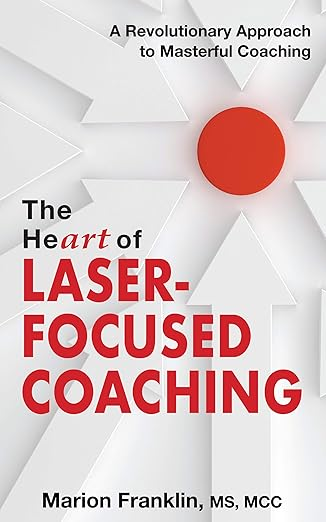
This is a great book especially when you’re just starting out as a coach.
At the beginning, coaching can feel overwhelming.
You don’t always know what to say.
You’re trying to figure out how to guide conversations naturally without sounding robotic.
This book focuses a lot on deep coaching conversations and learning how to ask better questions instead of trying to “fix” people or lead the session too much.
What I liked most is that it gives a lot of practical ideas.
It breaks things down in a simple way.
You can actually take questions from the book and use them in sessions.
For Career Transition Coaches especially, I think this matters because career conversations can become emotional very quickly.
People are confused.
Sometimes scared.
And more often than not- questioning their whole identity when it comes to changing their careers.
This book helped me understand how to approach those conversations better.
And honestly, I also really liked the way she coaches.
2. BAD THERAPY — ABIGAIL SHRIER

This book is not directly about coaching.
It’s more about psychology, mental health culture, and how therapy impacts people.
With that, I think that’s important for coaches to understand too.
At the beginning, I think many new coaches become confused about where the line is between coaching and therapy.
This book helped me understand that difference much better.
It made me feel more grounded in what I do,
And it also strengthened the belief that coaching is 100% the right path for me, not therapy.
As a Career Transition Coach, that clarity matters a lot.
Because clients are not looking for someone to “fix” them.
Sometimes they just need support thinking clearly,
making decisions,
building confidence,
and navigating change.
This book will give you a clearer perspective on your role as a coach.
3. BREAKING THE HABIT OF BEING YOURSELF — JOE DISPENZA
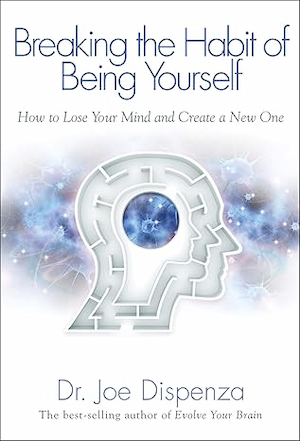
This book focuses a lot on self-awareness, mindset, and personal change.
A big part of the book is about how thoughts, emotions, and repeated behaviors shape identity and daily life.
Truth be told- I think coaches underestimate how much their own emotional state affects their sessions.
This book helped me connect better with myself.
And when you feel more grounded, you become a better coach.
You hold space differently.
You listen differently.
You become clearer in your own direction too.
That affects how you show up with clients, especially in Career Transition Coaching where people are often navigating uncertainty and fear.
Clients can feel when a coach is calm, present, and confident.
And they can also feel when a coach is disconnected from themselves.
4. ATOMIC HABITS — JAMES CLEAR
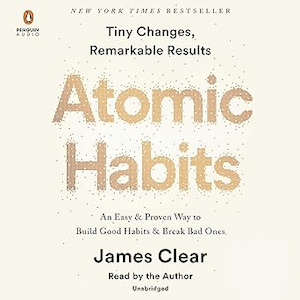
This is probably one of the most practical books on this list.
It focuses on how small consistent changes create long-term results and explains habit formation, identity-based change, and behavior systems in a very simple way.
Habits connect directly to coaching.
A lot of clients leave sessions motivated.
But motivation alone usually doesn’t last very long.
This book helped me most at the end of coaching sessions.
Especially when deciding:
What should the client focus on next?
What small action would actually help them move forward?
It also helped me anticipate problems before they happen.
And honestly, small adjustments usually work much better than huge dramatic plans.
Even outside of sessions, it can help you support clients better through behavior change and accountability.
5. DRIVE — DANIEL H. PINK
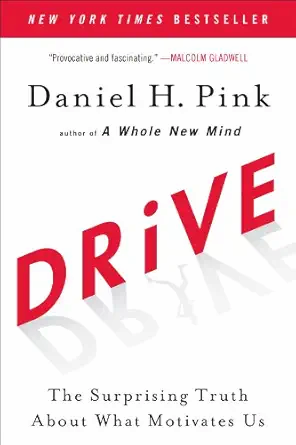
This book focuses on motivation and what actually drives people.
It talks a lot about autonomy, purpose, and mastery instead of using pressure or rewards as motivation.
I first read this book when I was still working as a nurse.
And it felt like this book was written for me.
While reading it, I realized the hospital system was doing almost the exact opposite of what actually motivates people.
That realization stayed with me for a long time and made me understand better what clients feel even if they come from a completely different background than me.
There is no doubt in my mind that this is highly important for Career Transition Coaches.
Because many clients are not leaving careers just because of money (even if that’s what they say).
A lot of them feel disconnected from meaning, growth, freedom, or purpose.
This book will help you to understand those deeper motivations better.
I’ve come back to it multiple times over the years.
It’s one of those books that stays relevant at different stages of life and business.
FINAL THOUGHTS
I don’t think coaches should only read “coaching books.”
All the books in the world will not help if you won’t practice.
That’s why, those books are really good but always remember that-
To become a better coach, you probably just need to have more coaching sessions,
And learn from each session.
If you have trouble finding new clients or transferring your coaching into a real business- feel free to schedule a short call with me.